For real. Looking at 20 years of data among 200,000 health professionals and nurse participants, Harvard researchers determined that a small serving of processed or red meat not only increases diabetes risk by up to 51%, but that substituting healthier protein sources–such as soy dogs, whole grains, nuts, beans, or lentils–actually decreases Diabetes risk by 20-25%. Read the abstract of the meta-analysis (a super study with statistically strong results) in this month’s American Journal of Clinical Nutrition. Unless you don’t mind Diabetes, it’s time to consider some meatless main dishes, STAT!
Love Straws? Love the word Awesome? Introducing Strawesome!
If you’re looking for a fun way to down a green Popeye Smoothie, kale apple juice, or just get better hydrated, you have GOT to check out these rad straws! Strawesome was started by Michigan mom and architect Daedra Surowiec, and is a family-owned business that creates healthy, environmentally friendly, unique, reusable glass drinking straws. Just when you thought you had everything!
Other fun ways to get wholesome goodness into your bod?
Purple Grapes Lower Heart Disease Risk
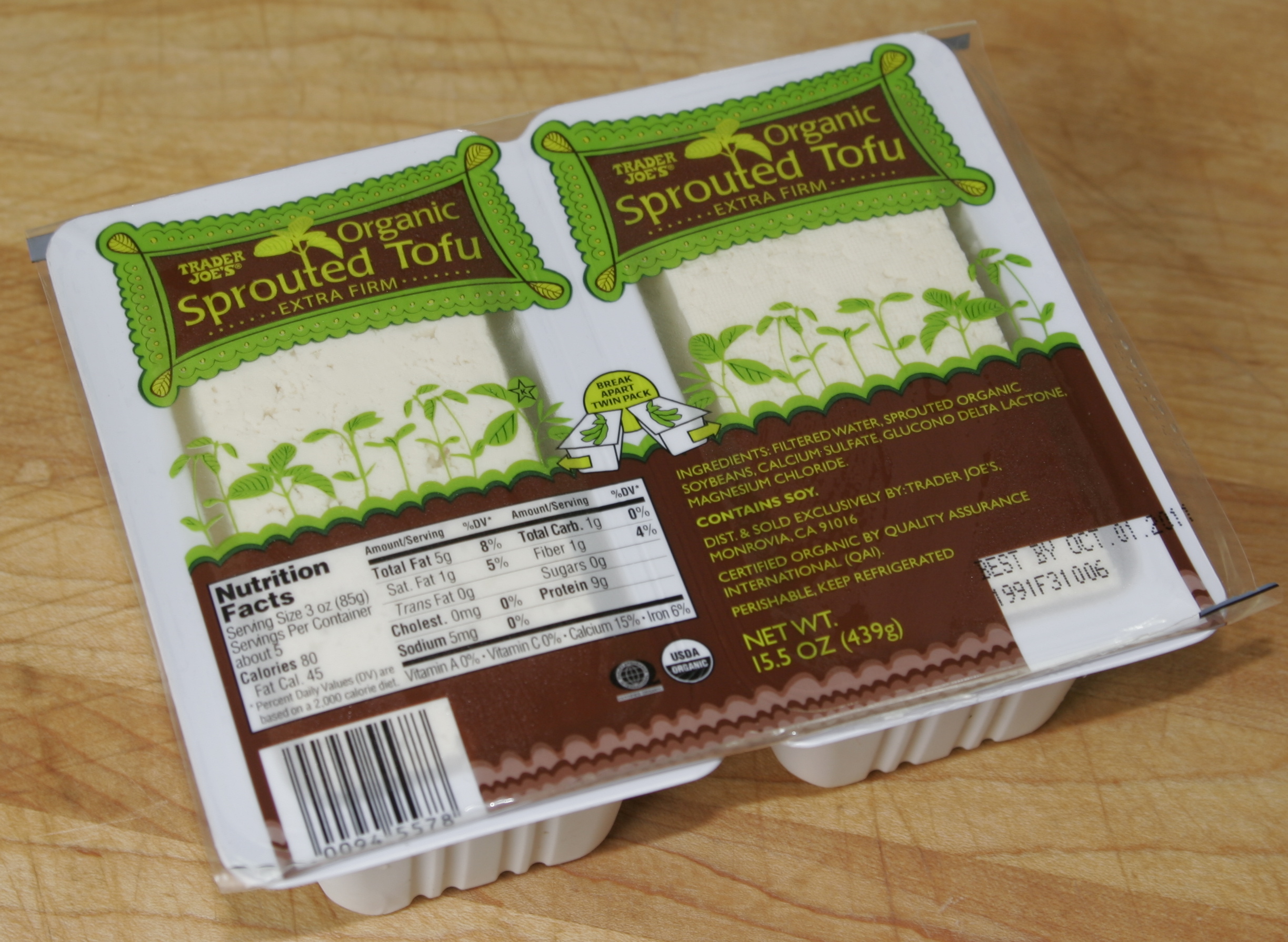
Product Review: Trader Joe’s Sprouted Tofu
Why Sprouted? (we’re beyond ‘Why Tofu?’, right?!) Regular tofu is made from cooked soybeans while sprouted tofu is made from sprouted soybeans. Sprouted tofu is easier to digest (sprouting softens the beans and releases troublesome phytates), and is richer in protein, calcium, and iron. Too good to be true? Nope! Sprouted T is similar in calories, slightly lower in carbohydrates, and slightly higher in fat (but the good omega-3 fish-oil type).
Getting soy foods into your cauldron is a pretty good idea. They help lower blood pressure and cholesterol, especially the bad, garbage-on-the-curb-of-your-arteries LDL kind, while also curbing diabetes and preventing cancer and its recurrence.
Sprouted tofu is used just like regular tofu (in Chocolate Mousse, or any of these 200 recipes), but what about the taste? Sponge-tastic? I surveyed Team Reilly in comparison to Trader Joe’s organic regular extra firm tofu (which is a family favorite). Both tofus were uncooked and untouched.
During a blind taste-test, I asked the team which one they preferred and if they could tell which one was sprouted.
Results:
Bitchin’ Dietitian: Preferred the softer-textured sprouted tofu, and of course knew it was the sprouted tofu b/c she made up the test.
Bitchin’ Husband: Thought the regular tofu had more flavor, and that the sprouted tofu wasn’t bad, but tasted like nothing. Guessed that the one he preferred was the sprouted tofu, but it was actually the regular tofu.
5-Year-Old: MUCH preferred the sprouted tofu and ate more than her taste-test serving, but thought it was the regular one.
3-Year-Old: MUCH preferred the regular tofu and ate more than his taste-test serving, but thought it was the sprouted one.
1-Year-Old: Didn’t have a preference, and ate both quite vigorously. When asked which one he thought was the sprouted one, he said “eh eh eh.” Translation: “the one on the left” (the sprouted one).
Interpretation of Results:
Sprouted tofu–with its easier digestion, higher levels of protein, calcium, iron, and omega-3 fats–is a groovy alternative to regular tofu. Since few people eat tofu raw (thank your lucky stars you weren’t part of today’s test), stir-frying, and adding flavors to tofu will change both types similarly. Sounds like a Sprout-Out for TJ’s Sprouted Tofu!
Recipe op?… What are your favorite ways to do tofu, or, now, sprouted tofu?
Garam Masala: Making Beans UnBoring for 800 Years!
I finally realized why my kitchen-made Indian food was tiers below the smooth grub at Bombay Gaylord: the absence of Garam Masala. It didn’t matter if I used gallons of coconut milk or bags of curry powder, without the hard-to-find GM spice mix, you might as well forget it. Garam Masala has 5 A’s!, and is a blend of cumin, coriander, cinnamon, cardamom, black pepper, and sometimes nutmeg. It’s been used since the 13th century in North Indian cuisine. The mix includes spices that help boost brain function and decrease inflammation (cinnamon), control blood sugars (cinnamon & coriander), fight cancer and ease digestion (cumin), and lower cholesterol (coriander). And it makes beans and other less appealing veggies taste exotic and exquisite.
I had a touch of trouble finding Garam Masala, but finally had success at my local food co-op (because eventhough you can make it from scratch, I wasn’t about to sacrifice a bike ride or a shower to do so), and had a chance to put it to the test.
We had just walked in the door from vacation and were in desperate need of groceries. Do you have the energy to zoom to the grocery store after stepping off an airplane? Me either. So I scrounged through the cupboards, freezer, and fridge, and salvaged portions of our garden produce that hadn’t been tasted by the squirrels, and ended up with a total hit of a dinner:
No-Food-in-the-House Curry
Serves 6
2 tsp olive oil
1 on-the-verge onion, shady spots removed, remainder diced
2 tsp crushed garlic (in the squeeze tube)
1 tsp curry powder
3 tsp garam masala
1 tsp sea salt
2 cups dried red lentils (could be any color lentil)
3 cups filtered water
4 ripe tomatoes (actually used the untouched portions of 6)
7 stalks organic celery (who says organic goes bad fast in the fridge?)
1 cup frozen organic chopped spinach
1/2 can (about 7 oz) light coconut milk
4 cups cooked brown rice (cooked while veggies & lentils cooked)
In a large pot, sauté onion, garlic, spices, and salt in olive oil until onion starts to brown, about 3 minutes.
Add remaining ingredients (minus the rice) and bring to a boil. Reduce heat to simmer, cover, and cook until lentils and veggies are tender, about 20 minutes.
Serve over brown rice.
What the critics said:
Bitchin’ Dietitian: “Hot Damn!!”
Bitchin’ Husband: “Wow. There’s a hot kick, and I think this is the best thing you’ve ever made.”
5-Year-Old: “I love it. Especially the rice.”
3-Year-Old: “I’m eating it, aren’t I? But now my tummy’s full.”
1-Year-Old: “…..” (Silence as he scarfed down an entire bowl.)
A healthy hit!! Your best “No-Food-in-the-House” meals?
Tart Cherry Juice for Sleep: Better than Tylenol PM?
While vacationing in Florida at my parents’ house, bedtime came quickly the first night and out came the tart cherry juice. At first I thought my wild parents decided to enjoy another glass of red wine, which I wouldn’t put past them in their rowdy retirement lifestyle that now includes late-night line dancing and swims with alligators. My dad–nutrition questionner extraordinnaire–poured himself a 4-oz. glass. “I’ve had so much trouble sleeping lately and the last few nights with this magic elixir have been amazing!”
We all have trouble sleeping occasionally, and it’s true that foods naturally rich in the antioxidant and sleep hormone melatonin (tart cherries, bananas, tomatoes, oats, rice bran, sweet corn, wheatgrass juice, and ginger) or the amino acid and serotonin precursor tryptophan (soy, almonds, peanuts, pumpkin seeds, spirulina, beans, and tofu) can help our noisy brains take it down a notch when our heads hit the pillow. But, how much sleepy food do we need and how many calories can we afford just to get a good night’s rest?
Since my first pregnancy nearly 7 years ago, I got in the habit of enjoying an open-face peanut butter or almond butter and banana sandwich at bedtime, to not only help prevent a ravenous 3 AM wake-up, but to calm my unruly hormonal brain which would otherwise start recounting 4th grade spelling bees. Since I now chase 3 young kids and dirty dishes from dawn till dusk, falling asleep at bedtime isn’t usually an issue. But on nights when I’m extra “busy,” could tart cherry juice work just as well as my PB&B? This week, I’ve tested it out:
Keep in mind this test was done on an 8-day vacation where the biggest stressor was deciding whether or not to take the morning swim in the backyard pool or the large club pool… but still, there was enough activity that winding down at the end of the day may have been tricky.
How I cherried: 4 oz Very Cherre 15-30 minutes before bed: 65 calories, 10.5 g sugar. Bedtime was 10-10:30 PM. I know it’s vacation, but the kids are up at 5:30 sometimes. Can you blame me?
What happened: Fell asleep within 5 minutes of head hitting the pillow, except the night I had the Dixie Chick’s “There’s Your Trouble” stuck in my head. That night it took 5-10 minutes to fall asleep. No trouble here!
So?: If falling asleep or staying asleep are potential problems, tart cherry juice is definitely worth a try. Even if it doesn’t work, you’re getting a hefty dose of antioxidants, some potential arthritis relief, and half your day’s supply of vitamin C in a low-cal, 4-oz glass. And, there’s a chance having the juice in the AM and the PM may work even better than solely @ bedtime (according to Dr. Weil).
This just in… you MUST try The Sleep Doctor’s Sleep Slim Smoothie courtesy of Dr. Oz. Sweet Dreams!
What other foods or drinks help YOU unwind?
Organic Foods Fuel Cancer Recovery
Guest Post by Kate Flaherty of the Mesothelioma Cancer Alliance
In our world of hyperpowered medical technology, there’s an arsenal of anti-cancer weapons from which we can choose in our fight against cancer. Beyond surgical procedures, chemotherapy, and other options from the world of medicine, we are discovering that some of the most potent anti-cancer treatments can show up right at the kitchen table.
All cancers respond in some way to an organic-based diet. Regardless of whether it’s a digestive-based cancer such as stomach cancer or a cancer that has its’ origins in the environment, such as mesothelioma, all benefit from the highly concentrated antioxidants in organic foods.
The average diet today lacks so many of the essential nutrients that our bodies need in order to experience complete health. The quality of our diet has an enormous impact on our every day health, but also on our capability to survive cancer and thrive.
Cancer treatments stress and challenge many systems in the body. Downing organic foods rich in antioxidants and free of pesticides that make further demands on our detoxifying organs increases our odds of survival. Choosing from the rainbow of fresh, organic vegetables and fruits, eliminating processed foods, and eating as close to nature as possible can and give someone struggling with cancer the foot-up that they need to tolerate their treatment. Since appetite is diminished during treatment, it’s critical that every bite of food is an organic powerhouse.
Dr. Andrew Weil, the guru of good health, specifically addressed the subject of an organic-based diet during cancer treatment:
“Treatments for cancer, either conventional, alternative or a combination of both, can be enhanced by some simple lifestyle, diet and nutritional supplement strategies. Eat generous amounts of vegetables and moderate amounts of fruit. Choose organic whenever possible to minimize exposure to pesticide residues that may put an extra detoxification load on the liver.”
If a totally organic diet isn’t doable, follow Environmental Working Group’s “Dirty Dozen” and “Clean 15” for which produce items should definitely be organic, and which ones aren’t high in pesticides and are ok to buy when not grown organically.
Dirty Dozen (buy organic): Celery, Peaches, Strawberries, Apples, Blueberries, Nectarines, Bell Peppers, Spinach, Cherries, Kale/Collard Greens, Potatoes, Imported Grapes.
Clean 15 (ok to not buy organic): Onions, Avocado, Sweet Corn, Pineapple, Mangos, Sweet Peas, Asparagus, Kiwi, Cabbage, Eggplant, Cantaloupe, Watermelon, Grapefruit, Sweet Potatoes, Honeydew Melon.
Other helpful tips include adding Asian mushrooms to the diet of the cancer patient, as well as drinking several cups of green tea each day, and supplementing with CoQ10, a powerful anti-oxidant, Omega 3 fatty acids and selenium, an important anti-cancer mineral.
Making the change to organics can make a positive impact on cancer prevention, treatment, life-expectancy, and survival. What are YOUR thoughts on organic foods and health?
1-Minute Gazpacho
Just walked in the door from a 95-degree hot frisbee game and needed some refreshing veggies FAST. Poof! Gazpacho to the rescue in less than a minute.
1-Minute Gazpacho
Makes 5 (1-cup) servings
4 ripe tomatoes
1 large cucumber, peeled if not organic
¼ red onion
1 green bell pepper (preferably organic)
4 cloves garlic
2 Tbsp olive oil
3 Tbsp red wine vinegar
¼ tsp black pepper
½ tsp salt
Hot sauce to taste (optional)
Blend all ingredients (except hot sauce) until smooth or desired consistency. Serve immediately (because you can’t wait), or chill in the fridge for an hour to let flavors marry.
Per cup: 89 calories, 5.5 g total fat, 0.5 g saturated fat, 0 mg cholesterol, 243 mg sodium, 9.5 g carbohydrates, 2.5 g fiber, 1.5 g sugar, 1.5 g protein, 26.5% vitamin A, 58.5% vitamin C, 2% calcium, 4% iron
10 Essential Ingredients for Quick and Healthy Meals
No more excuses! Healthy eating and ditching all the crud that’s gumming up your energy and soul are totally painless activities once you make them a priority. Here are 10 essential ingredients that will maximize your chances of success. Stop loading your body with processed garbage, take a fast field-trip to your local grocer, and start cloud surfing your way to health euphoria. Always have on hand:
1. Bagged Salad Greens. Salad doesn’t have to take hours of prep or your life savings to enjoy. Get a bunch of tasty, dark, salad greens, and enjoy them daily with low-fat dressing. (Have you had Trader Joe’s Wasabi Arugula? OH MY!!!)
2. Low-Fat Salad Dressing, or Olive Oil + Brown Rice Vinegar in a 2:1 ratio. Even the cutest of tushes need salad dressing on their greens. If I wasn’t already married, I’d consider a union with Trader Joe’s Light Champagne Vinaigrette. But when it’s out of stock in my fridge, a dash of olive oil, brown rice vinegar, and sea salt are perfect for dolling up the lettuce mountain.
3. Canned Beans: Garbanzo beans are especially great because they don’t usually require rinsing. Just drain and toss them on a salad, into a stir-fry, burrito, or stirred into soup. Or blend any can of drained beans with 1 cup salsa for a fast bean dip or sandwich spread.
4. Quinoa: (“keen-wah”). When you’re rushed for dinner, brown rice–or even white rice for that matter–takes way too long to cook. Quinoa is not only a great rice substitute rich in fiber and protein (and a gluten-free food), but it only takes 15 minutes to cook. Get pre-rinsed quinoa if you can, or rinse the seeds vigorously in water before cooking to remove the saponins. Quinoa is a seed that’s eaten like a whole grain, and can even be mixed with fruit, nuts, cinnamon, and non-dairy milk for a fast breakfast the next morning.
5. Berries: Fresh or frozen. Raspberries, blueberries, and blackberries are so full of life-extending compounds while also being rich in fiber and low in calories, that you’re better off opting FOR these sweet little miracle makers at meal or snack time. Toss them into breakfast cereals or smoothies, atop salads, or eat them by the handful. Sure feels better than the sugar crash of a Snicker’s!
6. Non-Dairy Milk: Fortified almond, coconut, hemp, oat, or soy milk have all the calcium & vitamin D of dairy milk, less sugar, better taste, fewer calories, and don’t cause mucous production, inflammation, and weight gain the way dairy milk does. Enjoy unsweetened almond milk with 45 calories & 0 grams of sugar per cup or original coconut milk beverage–include it in smoothies, pour into onto a bowl of high-fiber breakfast cereal, or add it to coffee or tea. Mmm!
7. Broccoli: The florets are so full of antioxidants, cancer-fighters, and hormone regulators, and they’re not a particular threat to pests. So, conventionally grown broccoli isn’t riddled with pesticides (Read: you don’t have to buy organic broccoli). Steam, roast, stir-fry, curry them (cook with curry powder and light coconut milk, see below), or dip them in bean dip for a satisfying snack.
8. Canned Light Coconut Milk: Light coconut milk (1/2 cup or more) and curry powder (2 tsp) can turn any veggie or veggie combo into a gourmet curry dish. Add beans for protein and serve over quinoa.
9. Kale: Rich in blood pressure busting chlorophyll, immune-boosting antioxidants, and calcium that’s absorbed twice as well as dairy calcium, kale is a true powerhouse. Toss it into smoothies, stir-fries, or bake it at 350 degrees for 30 minutes with a touch of olive oil and salt (stir after 15 minutes and return to the oven) for a crunchy veggie side dish even kids will crave.
10: Dark Chocolate: A few squares powerfully satisfy your sweet tooth and are loaded with antioxidants. Work from a large bar each week so you aren’t resorting to the Oreos in the cupboard to satisfy your post-meal sweet craving.
For more ways to incorporate these butt-busting powerfoods, snag a copy of my TJ’s Skinny Dish! book this fall! Other grocery essentials that make healthy eating easy breezy?
Fried Green Tomatoes: Garden Impatience Pays Off
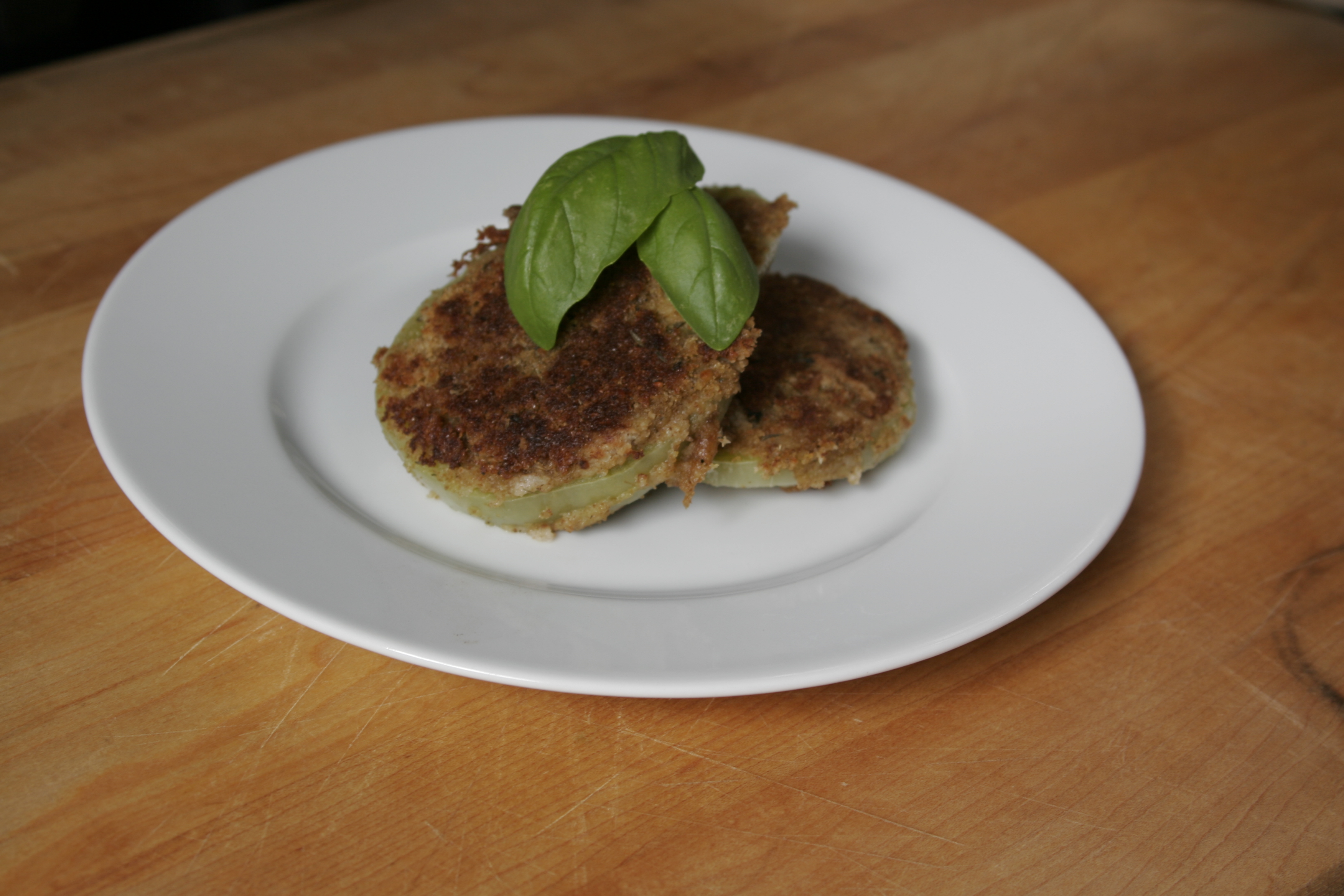
Waiting for produce to ripen has never been a real strength. I’ve been known to cut into rock solid peaches “just in case” or green avocados because they were a little softer than the day before, only to be pleasantly disappointed with what I knew was my fate all along. So as the forest of tomato plants in our back yard bursts with giant, green tomatoes, I’m bursting with an impatience I can’t tame. Those red juicy tomatoes will be SO SOFT AND BUTTERY, but I simply can’t wait! Today, I picked a handful of green tomatoes, sliced them up and lightly fried them. But WOW. Impatience can be delectable! Here’s how I made them, and how the critics felt about the creation:
Ripen Already! Fried Green Tomatoes
Makes 3-5 servings, depending on who’s at the table
3 slices high-fiber multigrain bread
6 fresh basil leaves
1/4 tsp dried thyme
1/4 tsp dried oregano
1/4 tsp sea salt
3 green tomatoes, sliced into 1/4-inch thick slices
Blend bread, basil, spices, and salt together into a moist, smooth bread crumble. Pour mixture into a pie dish or other baking dish (something good for dipping tomato slices).
Heat oil in large skillet over medium-high heat.
Sprinkle tomato slices with water, then dip/press bread crumb mixture onto both sides, and place in skillet. Cook 3-5 minutes on each side, covering pan to prevent oil from spattering, but to also speed up the cooking without a lot of oil. Serve hot.
Nutrition Info (1/4 of recipe): 161 calories, 11 g fat, 1.5 g sat fat, o mg cholesterol, 274 mg sodium, 16 g carbs, 6 g fiber, 1.5 g sugar, 3 g protein, 11% vitamin A, 30% vitamin C, 8% calcium, 7 % iron.
What the Critics Said:
Bitchin’ Dietitian: “Soft and buttery without the wait! A fairytale!”
Bitchin’ Husband: (skeptical…) “Wow, These are awesome. SO delicious.”
5-Year-Old: “Ew. Can I spit this out?”
3-Year-Old: “I don’t like this!! HELP!!!” (followed by a grand spit-out)
1-Year-Old: (if he could talk) “What’s wrong with brother and sister? These things are ridiculously delicious!!” (shoving all of his, sister’s, and brother’s in his mouth)
I also steamed a batch of sliced green tomatoes with fresh basil and salt, and they were surprisingly delightful. Other garden recipes that have worked or flopped this summer?