 Wondering about soy, cruciferous veggies, all the different types of thyroid hypers and hypos, why there’s a picture of a butterfly here, or just want some new cocktail party convo material? Check out this new post on KrisCarr.com. Thyroid Demystified!
Category: Energy
2 Must-Drink Summer Power Smoothies
I’m on a new kick this summer — I’ve dropped the breakfast oatmeal and bran flakes and have become a blending maniac! EVERY morning, I throw a bunch of colorful plant matter plus some seeds and perhaps a yummy powder into my Vitamix, blend it, and go. If there are leftovers, I pour them into sealed glass jars and guzzle later in the morning. Here are my 2 favorite blendcoctions:

Daiquiri Power Tower
Chia Daiquiri
Makes 3 12-ounce portions
2 cups frozen organic strawberries
1 banana
Handful organic kale leaves (lacinato or dinosaur kale are my fave), spinach if the kale is too kale-ey
1/4 cup chia seeds (get them at Costco: $10 for a 2-lb. bag): Awesome source of LDL cholesterol-lowering soluble fiber and heart-healthy Omega-3’s
3 cups fortified non-dairy milk such as unsweetened coconut milk: Great source of calcium and vitamin D
1 scoop Vanilla Almondilla Vega One Energizing Smoothie powder: Superstar for protein, fiber, and sweetened with stevia so low-sugar too!
Blend, pour, and go!
Nutrition Info per 12-ounce serving: 246 calories, 12 g fat, 6 g saturated fat, 0 mg cholesterol, 22 g carbohydrate, 14 g fiber, 10 g sugar, 11 g protein, 90% vitamin A, 141% vitamin C, 30% vitamin D, 25% calcium, 14% iron.
Brown Hippie
Makes 3 12-ounce portions
Not pictured, because you might not try it! It’s brown, people. Close your eyes and enjoy!
1 cup frozen organic blueberries
1 cup frozen mango chunks
1 banana
Handful organic spinach leaves
3 cups fortified non-dairy milk such as unsweetened soymilk: Great source of calcium and vitamin D
1 scoop vanilla hemp protein powder (such as the one from Trader Joe’): Super rich in protein, Omega-3’s, and insoluble fiber
1 frozen cube wheatgrass juice (optional): adds nature’s richest edible source of chlorophyll – a natural detoxifier and blood pressure reducer
Blend, pour, and go!
Nutrition Info per 12-ounce serving: 220 calories, 5 g fat, <1 g saturated fat, 0 mg cholesterol, 33 g carbohydrate, 8 g fiber, 19 g sugar, 12 g protein, 31% vitamin A, 37% vitamin C, 30% vitamin D, 32% calcium, 25% iron.
Ta da! 🙂
Raw Food 3-Day Starts Tomorrow!

Image by: Manitoba Harvest
A totally raw diet has been on my to-do list for a super long time. While I eat lots and lots of raw foods every day — sometimes 75% of what I eat is raw — I’ve never gone completely 100%. Actually, after looking at this raw meal plan, I know why I’ve waited so long! But, you can do anything for 3 days, right? This time around, I’m not going to do anything fancy or extreme. No sprouting or specialized products beyond hemp hearts for making raw hemp milk, and no specialized equipment beyond my juicer, Vitamix blender, and oven to act as a dehydrator running at 115 degrees. I *am* going to try and replicate those pricey kale chips that are coated with “cheesy” raw cashews. Keep an eye out for that final product. So, here goes: Starting tomorrow! With me?
Breakfast: I plan to start the day with herbal tea and a hearty Green Smoothie containing fruits (banana, berries), veggies (greens), raw almond butter (newly found at Trader Joe’s), and raw hemp milk (see recipe below). I’ll continue my philosophy that a healthy high-calorie breakfast will bring you nothing but glory throughout the day. Many raw foodists eat an entire watermelon and 15 bananas for breakfast. That sounds dreadful. Other ideas that sound way better (to me at least…):
- Larabar + Banana for on-the-go days
- Raw Breakfast Muesli
- Chia Pudding: omit cocoa and use raw hemp milk
- Raw Chocolate Banana Smoothie
- Instead of coffee, try this Raw Chai
- Raw nuts and Green juice (greens, celery, lemon, green apple). See video here.
Snacks: I plan to chow on raw nuts, fruit, veggies, and my Pulp Crax dipped in raw hummus or spread with mashed avocado. Perhaps some dried fruit or a Larabar.
Lunch: Large fresh veggie salad topped with raw seeds, cold-pressed olive oil (raw foodists like this brand, although I’ll probably stick with the cold-pressed one in my pantry for this 3-day experiment), a teeny tiny bit of apple cider vinegar (can’t find any other easy-to-find vinegars that are raw), and sea salt.
Dinner: Raw soup, warmed up with the spin of the Vitamix. Check out all these raw soup recipes. The Carrot Ginger and Cream of Mushroom look especially tasty. Or, I may go for Skinny Dish’s very own Gazpacho a la Shepherd Street using apple cider vinegar instead of red wine vinegar, omitting the croutons, and doubling up on the avocado. Plus, some raw almonds on the side or crumbled on top.
Dessert: 1 or 2 dates stuffed with raw almond butter. Divine! I tried this recipe for Raw Cookie Dough SHAPE Magazine a while back using raw agave instead of honey & maple syrup. It totally rocked!
Night-time Snack: I have one of these every night, and I can’t imagine that that urge is going to go away with the powers of a raw diet, although I’m totally open to being surprised. I will *plan* on having some fruit and a mini “trail mix” of dried fruit and raw nuts along with my herbal tea.
Doesn’t sound too bad, right? Raw diets claim to give you more energy, better clarity, greater euphoria, better sleep, and even better sex.
For today, happy green foods and St. Patrick’s Day! I’ll see you tomorrow for more green and more raw 🙂
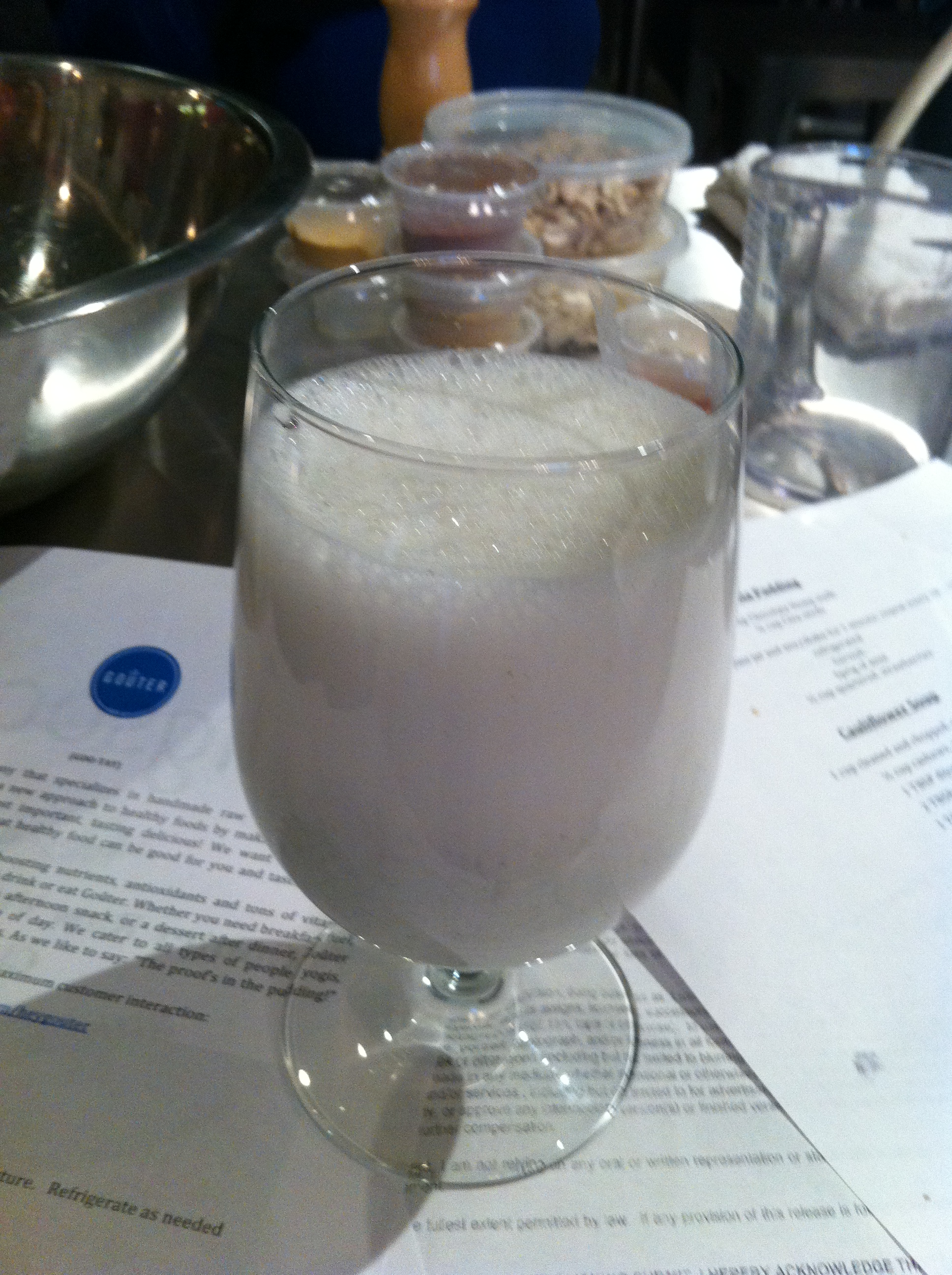 Raw Hemp Milk
1 cup raw hemp hearts
4 cups chilled water
Blend for 30-60 second until milky white and smooth. Store in fridge for up to 7 days. Makes 4 cups.
Detox Day 6: Thinking About Days 8, 9, & 10….

Mmm! A half-plate of veggies
Happy Day 6! What’s the latest? Still feeling good? Sleeping well and feeling energized? Now is a perfect time to start thinking about what happens the day after tomorrow. Will you go back to your pre-Detox eating? A modified version? Take today and tomorrow and make a plan for what you’d like to do long-term. Here are some popular, healthy, and realistic post-Detox modifications to consider:
1. Go back to drinking the morning cup of coffee you missed, but with vanilla almond milk instead of cream and sugar. Try this creamy, dairy-free concoction. Or, enjoy green, white, or black tea as your morning caffeinated beverage.
2. Continue eating the level of fruits and veggies with a giant heaping of cooked veggies at either lunch or dinner, and a giant serving of raw veggies at the other meal. Shoot for HALF your plate being veggies (either raw or cooked) at mealtime.
3. Continue with shakes or smoothies in the morning, but add a protein powder such as this hemp seed one from Trader Joe’s or Planet Fusion’s Vanilla Plant Fusion. High in protein, fiber, and essential amino acids, and makes your morning drink more filling.
4. Add a more substantial morning meal such as gluten-free oatmeal (Trader Joe’s has amazing gluten-free oats that seem exactly like traditional rolled oats) with a handful of dried cranberries for sweetness, raw cashews, cinnamon, and cooled down with a dash of unsweetened non-dairy milk. Or heat up a cup of cooked quinoa from the previous night’s dinner with dried fruit, nuts, cinnamon, and non-dairy milk.
5. Enjoy a raw food bar in the afternoon to satisfy your sweet tooth–they’re easy to keep on hand, easily survive life in the bottom of bags, and can be stepped on without changing shape. Examples: Larabar, Pure Energy, and KIND. These can all be found in any old grocery store, TJ’s, or Whole Foods.
6. Continue with the Detox as your constant (developing your own menus using the guidelines), and veer from the Detox for special weekend days, when you go out to eat (trying your best to keep with the guidelines, but allowing yourself those treats you may have been missing), have potlucks, or attend parties.
7. Do the Detox 1-2 days per week or 7 days a month, and a modified version on the other days.
What else will you do to carry on the healthy changes you made once the Detox is done? Hopefully you’ll all continue drinking all those energizing fluids!
Enjoy this day and the new, healthy you! XOXO
And….Go! Detox Day 1: Be Mindful, Set Goals
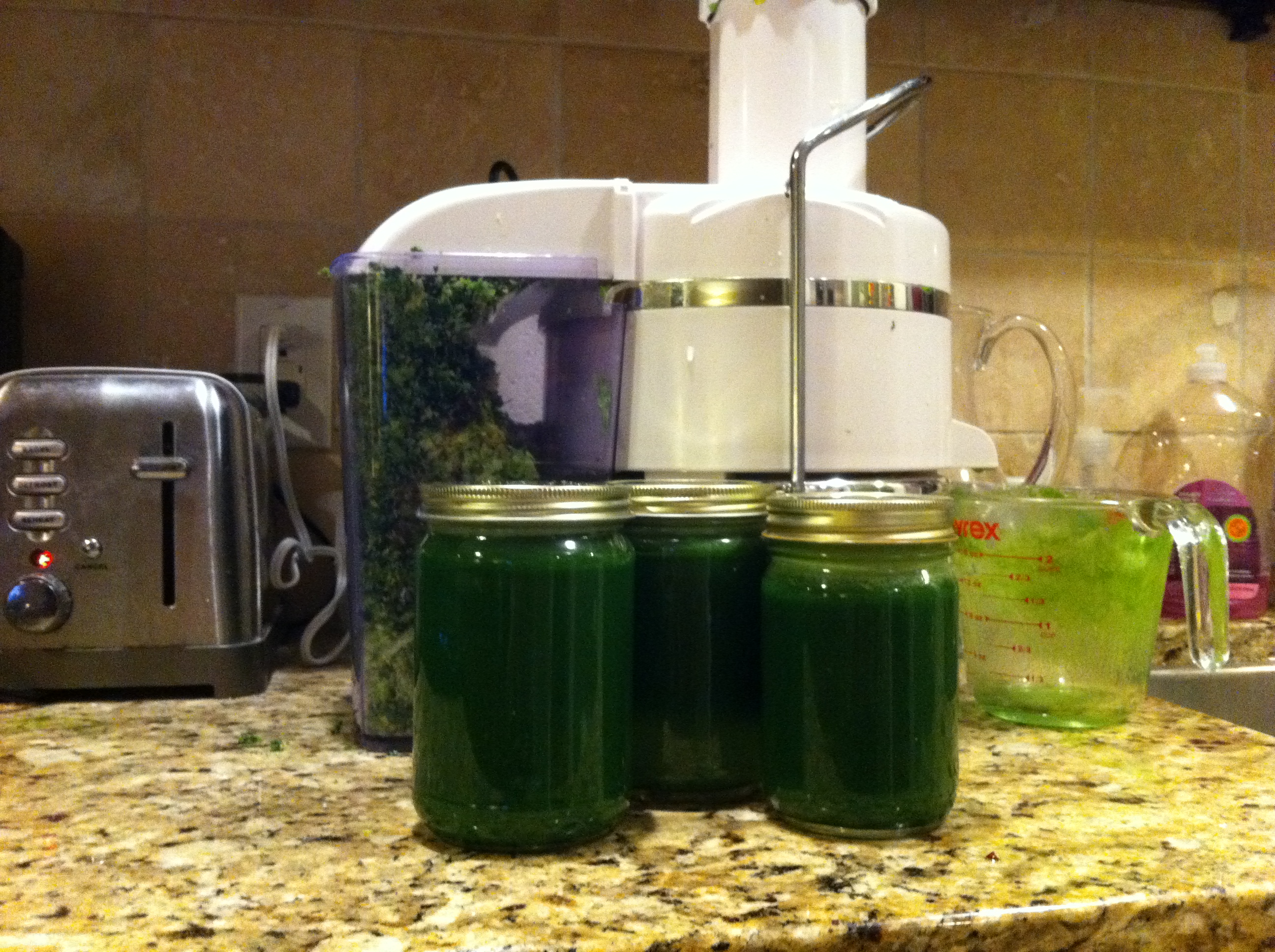
Kale Celery Green Apple Juice
Feeling fantastic already?!?
Hope you got completely sick and tired of gluten yesterday and stocked up on all those raw foods. It’s game day!
To start out Day 1, here’s last year’s video of the Green-Apple Juice in a juicer (ignore my daughter who thinks she’s Inspector Gadget). I prefer this concoction juiced vs. blended, but blending is perfectly wonderful too. If you’re blending and you don’t have a Vitamix or a Blendtec, consider using a food processor for the veggies and apples, and then blending that concoction with the water and ice. It’s likely to slide down easier. And, you can also substitute one of this week’s smoothies for today’s green juice. Surprise!
Juice vs. Blend? What’s the difference and why the extra appliance? Check this quick info by my pal Kris Carr. She talks chlorophyll and alkalinity–it’s worth a read. My juicer is the Jack Lalanne Classic Juicer –a brand new hand-me-down gift, and it works just fine. It costs around $100 if you buy it from their website. Just an FYI. I tend to use my Vitamix daily (green smoothies, soups, hummus, dips), and my juicer weekly. Not saying that’s perfect, just what I do.
So, TODAY. Be mindful of every tea sip and food morsel — believe you me, that morning fruit is going to be the BEST FRUIT you ever ate! This day is by far the hardest, but you can absolutely do it. Don’t forget, however, that you can increase your serving sizes of detox food if you’re feeling like you’re really low on calories (starving, hunger pangs, spacey-ness). Add fresh fruit, raw nuts and seeds, or an avocado for quick, extra energy, and carry those with you just in case. If the detox meal plan is very different from your typical, then Day 1 is going to be a big eye opener. Embrace the change!
And think about your Detox Goals today. What do you want out of this? To ditch sugar cravings, increase veggie cravings, or lose weight? Are you hoping to grow wings and fly by Day 7? Keep me posted!
And finally finally, you should have more energy today than you’re used to. Laugh louder, smile harder, and type more. I want updates in the Comments section.
Green juice cheers!
xoxo
The Biggest Detox Question: What About My Morning Coffee?
 Lots and lots and lots of people love their morning cup ‘o Joe. Like 90% of Americans. (I may or may not be in that 90%.) AND, if you’re going to truly detox your body, you need to skip the java.
A true detox is coffee-free because coffee (and it’s high caffeine content) decreases nutrient absorption (which is EEEsential for an effective detox), dulls the tastebuds making detox food (and all food) less satisfying, makes the body more acidic, taxes the detox organs (the lovely liver and the kidneys), fires up your adrenal gland in a not-so-pretty detox way, and often contains other naturopath no-no’s like sugar and creamer. Brutal, right?!
BUT!! Eventhough doing the 7-Day Detox starting on Monday *should* be coffee and caffeine-free, and you *should* take the next 3 days to wean off of caffeine, you can still do a world of detox good without a world of caffeine withdrawal headaches if you have to cheat ever so slightly…
Instead of coffee, have caffeinated tea (in order of detox diet supremacy preference):
1. White Tea: With the least caffeine and the most antioxidants, do it up. Also known as the supersonic tea supertonic. My favorite is Tazo’s Cucumber White. It’s no Joe, but it’s certainly someone!
2. Green Tea: It’s got a mediocre amount of caffeine so you shouldn’t get that knife-in-the-back-of-the-head headache (I may or may not know about that first-hand), but it also has a ton of healthy antioxidants, and tastes gross with milk & sugar (a good thing!). If you don’t like green tea, try ROASTED green tea like the Haiku brand found at Whole Foods Market. Tastes like a campfire!
3.Green Tea Latte: The one at Starbucks is amazing, but even a tall size without syrup has 31 grams of sugar. Might as well have coffee with coffeemate! Make your own:

Homemade Green Tea Latte
Makes 1 serving
1 Tbsp green tea matcha powder* (extra credit if it’s unsweetened)
8 ounces unsweetened soymilk
1/2 tsp stevia, or 1 tsp sugar (if you must)
Whisk ingredients together over medium-high heat until bubbly.
*The sweet matcha powder has 12g sugar per tablespoon, which is ok as long as you use unsweetened non-dairy milk
And there you have it! THREE ways to not NOT detox because you fear the lack of caffeine. Day 1 is the hardest — have the Green Tea Latte on that day and then sip through some plain green and white tea after that. See you in a few days!
Oh, NUTS!

Out-Of-Hand Nuts (and a few Seeds)
Unless you have an allergy (obvious, and more about why those are on the rise here), it’s time to pop some nuts into your mouth. A new study published in Nutrition Research concluded that even though nut enthusiasts generally have a higher overall calorie intake, 1/4-ounce or more per day of OOHN (Out-Of-Hand Nuts) meant better overall intake of healthy fats and fiber, and a lower intake of cholesterol, sodium, and sugary carbs. More OOHN also meant lower risk of high blood pressure and better “good” HDL cholesterol–both indicative of lower heart disease risk. And yes, the researchers coined the acronym for Out-Of-Hand Nuts, which literally means nuts that you eat out of your hand versus those stashed in cookies, bread, cakes, etc.
While OOHN lovers DID consume more calories than OOHN anti-lovers, the lovers generally had similar or lower Body Mass Indexes. Perhaps it’s all the calories burned tossing the nuts into one’s mouth. Have you had YOUR out-of-hand nuts today?
Soda (Part Deux): Diet vs. Regular

Izze Soda
Guest Post by Daniela Baker
If you’re addicted to drinking soda, you’re certainly not alone. Soda cans and bottles hold more than twice as much as they did in 1950, and that extra soda really adds up. With the average American drinking more than fifty gallons of soda, energy drinks, and fruity drinks a year, it’s no wonder we struggle to figure out which is the better choice.
Unfortunately, we all know that drinking soda–whether diet or regular–isn’t the greatest choice for our health. But sometimes you may feel like you need a Coke or a Pepsi to get you through the day. In times of weakness, which is the better choice: diet or regular?
Your health
According to the Harvard School of Public Health, the a single can of regular soda can run you up about 150 calories, mostly from the high fructose corn syrup used to sweeten it. Drinking just one can like this a day could help you pack on fifteen pounds over the course of a year. FIFTEEN POUNDS! Regular soda consumption boosts rates of obesity and diabetes, and regular consumption of regular soda is often a risk factor for heart disease. In Harvard’s Nurses’ Health Study, women who drank two or more servings a day of sweet drinks had about a 40% increase in their risk for heart disease related death and heart attacks.
So what about diet soda?
In the short term, the Harvard School of Public Health says that switching from regular to diet soda can help with weight loss, since diet soda doesn’t influence blood sugar levels or come with lots of added calories. However, studies have shown that consuming artificial sugars can actually cause you to consume more overall calories compared to diets that contain regular sugar and no artificial sweeteners. This is because our brains are meant to link sweet tastes and calories, and they’ll help our bodies automatically adjust intake for caloric needs. When the link between sweetness and calories is cut, though, it seems that the hormones and chemicals in the brain that tell us when to stop eating can go haywire. And don’t forget the recent study linking diet soda consumption to heart problems. Crud!
Okay, so neither regular soda nor diet soda is good for your health. But as an occasional treat, neither one of them is going to harm you too much, either. If you’re really concerned about making healthy choices, though, which one should you choose to have as a treat once in a while?
The verdict
An occasional diet soda is OK, and if you absolutely have to choose between diet and regular (meaning you’re actually going to die without one or the other, and the only options around are in a vending machine), then diet is *probably* better (Harvard says diet is better on occasion, and on account of the obesity epidemic).
HOWEVER, try to avoid getting in the “diet or regular” situation. Keep a stockpile of Izze sodas (made from sparkling juice, containing no refined sugars, preservatives, caffeine, or artificial anything) and seltzer water on hand to satisfy your bubbly needs. Or, mix seltzer with fruit wedges or fruit juice for a refreshing and actually nutritious beverage. All of these healthy options can help you wean yourself off of regular soda, and don’t add up to too many extra calories in your day. Look into the SodaStream for seltzering water at home. Save bottles, $$, and impress your friends! It costs about $100 plus the $15 carbon dioxide cartridge every 60 to 130 liters.
Daniela Baker is a health- and fitness-conscious mother of two who is passionate about overthrowing the standard American diet by teaching others how to cook healthy, home-cooked meals and trade their couch potato lifestyles for more active ones. She loves spending time outdoors with her crazy canine and two very active kids, and works hard to set a good example for her family by making healthy food and lifestyle choices.
And Here It Is: Diet Soda Causes Heart Problems

Photo by: Rafakoy
Diet soda always seemed so good to be true, didn’t it? Sweet but no calories? A sugary, bubbly, and guilt-free green card? Well, a new study out of the University of Miami Miller School of Medicine and Columbia University Medical Center found that people who drank diet soda daily had a 43% increased chance of suffering a vascular event (heart attack, stroke, vascular death) than people who drank none, and that was after taking into account pre-existing vascular conditions such as diabetes, high blood pressure, and metabolic syndrome. The researchers are unclear why diet soda had such harmful effects. Interestingly enough, however, researchers found that regular soft drink consumption and a more moderate intake of diet soft drinks did not appear to be linked to a higher risk of vascular events.
I’ve long discouraged diet sodas and artificial sweeteners because while they can technically help you meet your fluid needs, they leave your body wondering why it didn’t get any sugar out of the sweet-tasting beverage, causing you to eventually crave and scavenge for sugary treats. This makes you grumpy and crazy, and causes you to cycle through diet sodas, candy bars, guilt, more diet sodas, free-based sugar, and so on. Plus, many individuals feel more anxious after consuming artificial sweeteners and often have trouble falling asleep at night, regardless of caffeine consumption.
If you need to sweeten and a touch of real raw sugar or agave nectar won’t do it, stevia powder like Truvia (made from stevia leaves) has zero calories and is made from nature, not chemistry. Plus, it doesn’t have the unhealthy heart or sugar-craving delirium side-effects. For beverages, however, straight up water jazzed with fresh fruit and cucumber wedges, or filtered water seltzered with the at-home Soda Stream, are always best.
Sorry to bear the bad news, diet soda lovers! But, the good news is that after 3 diet soda-free weeks, your taste buds will adjust and you’ll be clear out of the health risk woods. Plus, you’ll feel shockingly amazing. No more panicked vending machine runs!
Vitamin D DanDy

Photo by: Barry Bridges
Are you feeling unexcited about your recent lottery win, or less energized about the energizing aspects of your life? If so, it may be time to load up on vitamin D. New stats show that 70% of Europeans have low Vitamin D levels, and I was reminded of this potential as I gazed out my window this morning at a snow-covered yard and a sun-deficient sky. Also known as the “sunshine vitamin,” vitamin D is produced when ultraviolet (UV) rays from sunlight strike your skin. It’s found naturally in very few foods, added to some foods, and also available as a supplement.
SPF 8 and glass windows block vitamin D’s synthesis, darker skin produces less vitamin D with sunlight exposure, and cloud cover and shade reduce UV rays by about half, which is why it’s no surprise that many, many “I used to have energy” folks are coming up short this time of year. If you live at 42 degrees north latitude (I’m talking to you, northern Cali to Boston!), UV energy is insufficient from November through February. Once summer hits, it’s crucial to soak up a little bit of sun to refuel your tank.
How much do you need?
Just 5-30 minutes of summer sun from 10 AM – 3 PM twice a week to your face, arms, legs, or back without sunscreen will do the trick. You make about 20,000 International Units (IU’s) with just 20 minutes of summer sun. If you go the supplement route—necessary in winter months—the recommended intake is 400-1000 IU’s per day. However, some doctors and researchers recommend 2,000-4,000 IU’s daily for people with normal levels, and 5,000-10,000 IU’s daily for people with below normal levels. Vitamin D2 (Ergocalciferol, a synthetic form of D) is less bioavailable than Vitamin D3 (Cholecalciferol, animal-derived, and the kind that the sun makes in your skin), which means you need more D2 than D3 to increase your blood levels of Vitamin D when sunshine isn’t around.
Why is D so essential?
Bones need it for calcium absorption, and it’s also critical for neuromuscular and immune function, reduction of inflammation, and may be helpful in preventing cancer of the breast, ovary, colon, and prostate, and improving mood, depression, and energy levels especially during winter-time months. Plus, vitamin D research is getting close to proving it’s key role in preventing and treating type 1 and type 2 diabetes, insulin resistance and glucose intolerance, heart disease, high blood pressure, multiple sclerosis, and other medical conditions.
Anything else?
A brand spankin’ new study just found that adequate Vitamin D could reduce inflammation and aging of the eyes as it improves retina health. Plus, previous studies have found Vitamin D deficiency to be a complication with liver disease and linked with increased risk of asthma among African American kids. Adequate Vitamin D levels are crucial for cancer prevention and survival, and are even pointing to increased survival among elderly women. For more info on D facts and figures, check here.
Where to Get It in the Winter
Many foods are fortified with Vitamin D, and say so on the label: Super sources are non-dairy milks including Earth Balance Soymilk which contains more Vitamin D than other non-dairy milks (120 IU’s per cup compared to 100 IU’s per cup). Non-dairy milks are also fortified with Calcium, Vitamin A, and Vitamin B12.
So where do you get your D? Time for a sunny vacation perhaps?
 Delish & Healthy-ish With Jen Reilly, RD